Your Flagship Phone Was Built by Women the Industry Doesn't Count as "Women in Tech"

Okay, let's talk about who actually builds your device.
Not designs. Builds. Physically. With their hands.
Every March, tech journalism runs the same set of stories. Female founders. Female VCs. Female engineers at $10 billion software companies. The coverage is real and some of it is genuinely good. But there's a version of the "women in tech" conversation that stops at the campus boundary — at the companies with PR teams and conference stages — and treats the rest of the hardware supply chain like it doesn't exist.
The rest of the hardware supply chain is where the majority of the physical work happens. And it's disproportionately done by women. Under conditions that the industry that profits from that work would prefer you not think about too carefully.
I'm going to make you think about it carefully. It's March. We might as well be honest.
The Cobalt Problem
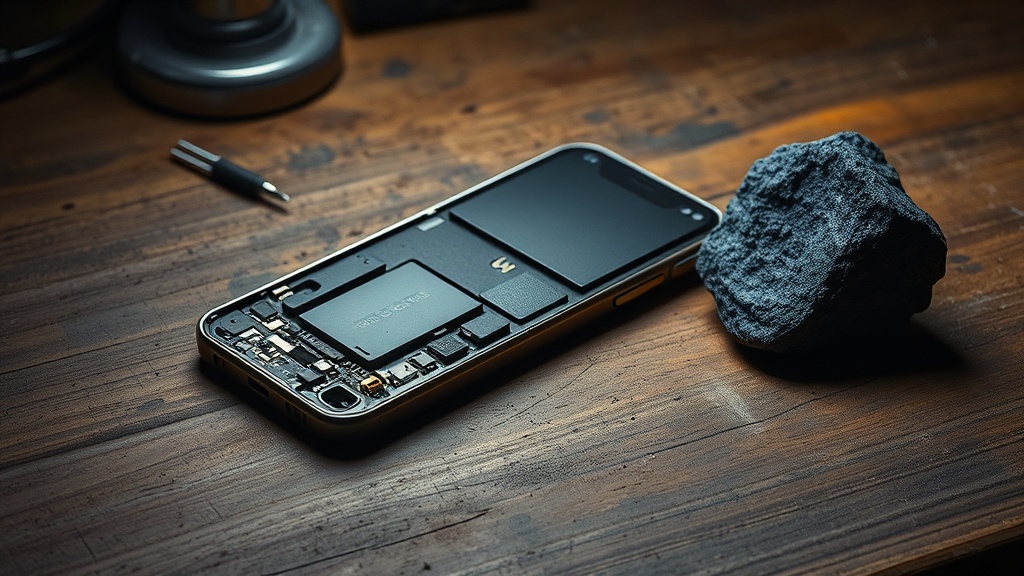
Your phone battery contains cobalt. The Democratic Republic of Congo supplies roughly 70–75 percent of global cobalt production — the USGS's 2024 Mineral Commodity Summaries put DRC output at approximately 74 percent, and Benchmark Mineral Intelligence's tracking shows that share has grown alongside EV demand, not shrunk. A significant portion of that comes from artisanal and small-scale mining (ASM), meaning informal operations, minimal safety equipment, no regulated labor conditions.
Women work in ASM cobalt operations in Lualaba and Haut-Katanga provinces. They carry ore-bearing rock, wash ore by hand in water contaminated with heavy metals, and work near tunnels with minimal structural reinforcement. Cobalt dust exposure is associated with hard metal lung disease. Pay is calculated per sack. There is no workers' compensation structure in place.
(I'm aware this is a heavy open to a Friday hardware post. It is a heavy situation. I'm not going to soften it into a "food for thought" moment.)
The tier-one suppliers — the battery cell makers, the material refiners — source from this ecosystem. The brands at the top of the chain (Apple, Samsung, everyone else) have supplier codes of conduct that the supply chain audits nominally, but the artisanal layer is structurally difficult to audit. The industry knows this. The industry funds initiatives. A 2023 OECD due diligence review documented persistent gaps between published commitments and actual ASM-layer conditions — these initiatives have documented, limited effect on the women carrying ore sacks.
The device you buy in March is connected to that woman. The women in tech conversation, as currently conducted, is not.
The Assembly Floor
Foxconn City in Zhengzhou. The Pegatron facilities outside Shanghai. The Samsung assembly plants in Vietnam. These are where your phone gets built, physically — placed, soldered, screwed, tested, packed. The workforce skews heavily female, particularly in fine assembly and quality inspection roles. Industry labor research and China Labour Bulletin surveys from the early 2020s consistently put women at 60–80 percent of assembly-line headcount in electronics manufacturing, depending on facility and product type.
The conditions vary. Some facilities are genuinely better than the horror stories from a decade ago. Some are not. The common threads: young women from rural areas, company dormitories, overtime structures that are formally voluntary but practically mandatory, employment contracts that make collective bargaining difficult. A 2022 China Labour Bulletin report documented ongoing wage theft and dormitory fee deductions at multiple contracted suppliers for major brands.
These women are extraordinarily skilled. The manual dexterity required for fine electronics assembly is real — it's not unskilled labor regardless of how the labor market prices it. The quality inspection work requires training and sustained concentration. A "women in tech" framing that limits itself to engineering degrees and founding teams renders these workers invisible as participants in the tech industry. They built your phone. The industry that shipped it doesn't call them tech workers.
The E-Waste Floor
When your phone dies, it goes somewhere. The largest informal e-waste processing zones include Guiyu in China, sites in Delhi NCR and Moradabad in India, and locations in Pakistan and Nigeria. Agbogbloshie in Ghana underwent significant remediation and scrap dealer relocation beginning around 2021 — but advocates including the Agbogbloshie Makerspace Platform have documented that processing activity shifted rather than stopped, relocating to nearby Old Fadama and peri-urban Accra zones rather than disappearing.
In these locations, devices get manually disassembled to recover metals — copper, gold, aluminum — through processes that include open burning of circuit boards and acid baths. Women are significantly represented in sorting and lower-value recovery steps. The health exposures include lead, mercury, cadmium, brominated flame retardants, and polycyclic aromatic hydrocarbons from burning. The UNEP's 2023 Global E-Waste Monitor documented elevated blood lead levels and reproductive health impacts in communities near informal processing zones.
The premium trade-in and recycling programs that brands run are real. The UNEP monitor estimated that roughly 22 percent of global e-waste is formally documented as recycled — the rest flows into informal channels. Women sorting circuit boards in informal processing zones are a real end point of the product lifecycle. The product lifecycle documentation doesn't reach them.
Why This Is a Hardware Problem, Not a PR Problem
The standard industry response: we have a supplier code of conduct, we fund responsible sourcing initiatives, we are working to improve conditions throughout our supply chain. That's not wrong, exactly. It's also been the standard response for fifteen years while conditions in artisanal cobalt mining have improved marginally, if at all, at the ASM layer.
This is partly a hardware problem in a specific sense: the material requirements of the devices drive the supply chain. Cobalt in the battery is a design choice that alternatives — lithium iron phosphate, silicon anodes, cobalt-reduced cathode chemistry — are slowly eroding but haven't replaced at scale in premium flagship devices. The race to thinner, lighter, higher-capacity devices creates pressure on supply chains that gets absorbed by the most vulnerable workers.
Dame Clare Grey's group at Cambridge is doing battery chemistry research directly relevant to cobalt reduction. Women in materials science are working on the technical solutions. That's the version of "women in tech" the industry celebrates when it gets around to the hardware layer. The women whose working conditions those solutions would improve are a different conversation.
The Fairphone model — transparent supply chain, published conflict mineral sourcing, worker welfare funds embedded in the bill of materials — represents the most sustained attempt by a consumer hardware company to make supply chain accountability a design requirement rather than a compliance exercise. Apple and Intel have pushed supplier disclosure further than most on the reporting side. But Fairphone is the company that has structurally embedded worker welfare funding into the product price rather than treating it as an external CSR line item. It's a small company with a small market share. The incentive structure for the rest of the industry is to fund initiatives, publish reports, and continue.
What "Women in Tech" Needs to Mean
I'm not saying the stories about female engineers and founders don't matter. They do. Representation in design and engineering roles has downstream effects on what gets built and how. That's real.
I'm saying: if the conversation only covers the people with LinkedIn profiles and conference keynote slots, it's a conversation about a small slice of the actual industry. The women who built the phone you're reading this on — mined the materials, assembled the components, will eventually sort the e-waste — are participants in tech. The industry's relationship with them is a tech industry problem. The IWD coverage that ignores them isn't a full celebration of women in tech. It's a celebration of some women in some tech, while the rest remain outside the frame.
The hardware doesn't lie about where it came from. We just don't look.
The verdict for your wallet: Fairphone 5 remains the most transparent mainstream option with published conflict mineral sourcing and a worker welfare fund structurally embedded in the product price — not an offset, not a donation-matching program, a line item. Repairability score: 10/10. They're explicit that their supply chain isn't clean, just more accountable than the alternatives. If you're thinking about your next upgrade and this stuff matters to you, that's the number to look up.
Stay wired.