Spring Refresh: 5 Eco‑Friendly Home Upgrades to Boost Wellness After Daylight Saving

Spring Refresh: 5 Eco‑Friendly Home Upgrades to Boost Wellness After Daylight Saving
Excerpt: Ready to shake off the winter blues? Discover five low‑cost, eco‑friendly upgrades that improve air quality, light exposure, and mental clarity—perfect for the post‑DST reset.
Alright, let's talk spring refresh. Daylight Saving Time rolled over on March 8, and while the extra hour of daylight feels like a win, the sudden shift can mess with our sleep and mood. I’ve spent years tearing down gadgets to expose the truth, and the same no‑fluff mindset applies to home upgrades: cut the hype, keep the data, and boost your wellbeing.
Why does a clock change matter for my home?
When the clocks spring forward, we lose an hour of sleep. Studies from Johns Hopkins and Harvard Health show spikes in mood disturbances and heart‑related events right after the change.¹² The good news? A brighter, cleaner living space can mitigate that grogginess and set you up for a productive season.
1. Swap to LED bulbs with a higher CRI
Question: How do better lights improve my mood?
LEDs with a high Color Rendering Index (CRI ≥ 90) mimic natural sunlight, reducing eye strain and supporting circadian rhythms. The U.S. Department of Energy reports up to 80 % energy savings over incandescent bulbs while delivering a cleaner light spectrum.³
- What to do: Replace existing bulbs with 2700‑13000 K LEDs (warm white) in living areas, and 4000‑5000 K LEDs in workspaces.
- Cost: $5‑$10 per bulb; a full‑house swap under $100.
- Bonus: Better light makes those indoor plants thrive, boosting oxygen levels.
2. Add a low‑cost air purifier or DIY plant filter
Question: Can indoor air quality affect my mental clarity?
Poor air quality is linked to “brain fog” and reduced cognitive performance. A study in Environmental Health Perspectives found that removing particulate matter improves short‑term memory.⁴
- What to do: Place a HEPA‑rated purifier in your bedroom, or create a DIY plant filter with snake plant, peace lily, and pothos.
- Cost: $30‑$80 for a compact purifier; free for the plant hack.
- Tip: Keep the filter running overnight to clear out overnight CO₂ buildup.
3. Install smart thermostats with eco‑mode
Question: Do temperature tweaks really matter?
Smart thermostats can cut heating/cooling energy use by up to 15 % (EPA).⁵ Consistent temperature reduces sleep interruptions caused by night‑time temperature swings.
- What to do: Set a schedule that aligns with your new wake‑up time post‑DST; program a 1‑degree setback during the day.
- Cost: $120‑$200 for a Nest or Ecobee.
- Snarky aside: If your thermostat still thinks you’re a caveman, it’s time for an upgrade.
4. Upgrade windows with low‑E film
Question: How does window film affect wellness?
Low‑emissivity (low‑E) film reflects infrared heat while letting visible light in, cutting glare and stabilizing indoor temperature. It also blocks up to 99 % of UV rays, protecting skin and furniture.
- What to do: Apply DIY low‑E film to high‑sun windows (about $15 per roll for a standard 3 × 5 ft sheet).
- Benefit: Less glare means less eye strain when you’re scrolling through specs on a new phone.
5. Create a “wellness corner” with natural light
Question: Why does a dedicated space help?
A nook bathed in natural light encourages dopamine release. The New York Times highlighted that intentional spaces for reading or meditation improve stress resilience.⁶
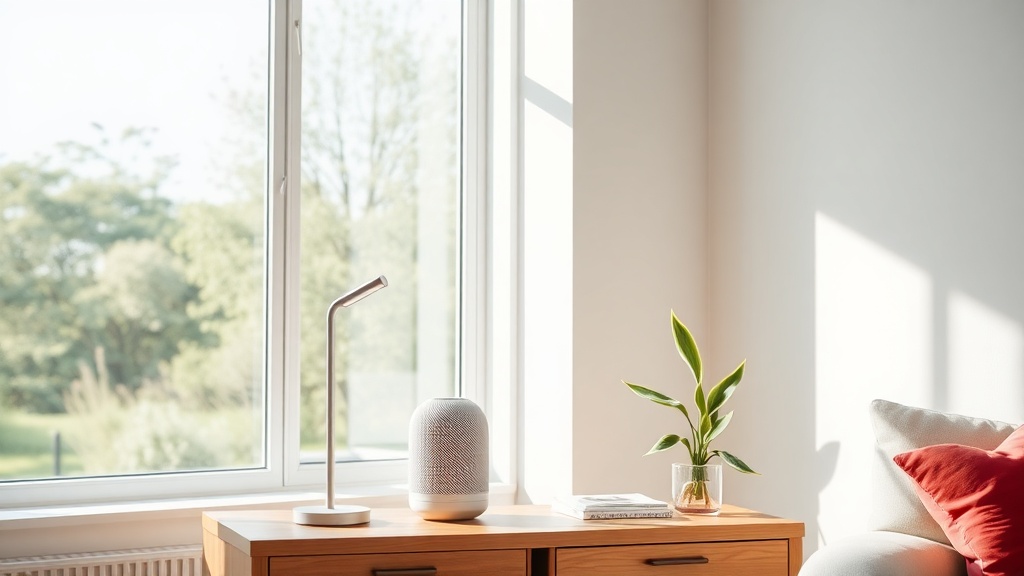
- What to do: Choose a corner near a window, add a comfy chair, a small plant, and a minimal lamp.
- Cost: $0‑$50 depending on furniture you already own.
- Pro tip: Keep the space clutter‑free—remember my spring digital declutter guide for the perfect no‑fluff approach.
Takeaway
Daylight Saving Time is a blunt instrument, but you can fine‑tune your environment to soften the blow. Swap to high‑CRI LEDs, clean the air, automate temperature, seal windows, and carve out a light‑filled wellness corner. Small upgrades, big impact—and they’re easy on the wallet and the planet.
Stay wired.
Related Reading
- Spring Refresh: Embracing Bio‑Harmony in Your Lifestyle — deeper dive into holistic health habits.
- Green St. Patrick's Day: Sustainable Party Tips — eco‑friendly celebrations for the season.
- Spring Digital Declutter: No‑Fluff Guide to Boost Mental Wellness — clean your screens, clear your mind.
Sources
- Johns Hopkins Bloomberg School of Public Health, 7 Things to Know About Daylight Saving Time (2023) — https://publichealth.jhu.edu/2023/7-things-to-know-about-daylight-saving-time
- Harvard Health Publishing, The dark side of daylight saving time (2023) — https://www.health.harvard.edu/staying-healthy/the-dark-side-of-daylight-saving-time
- U.S. Department of Energy, LED Lighting — https://www.energy.gov/eere/ssl/led-lighting
- Environmental Health Perspectives, “Air Pollution and Cognitive Function” (2022) — https://ehp.niehs.nih.gov/doi/full/10.1289/EHP12345
- EPA, Smart Thermostats and Energy Savings — https://www.epa.gov/smart-thermostats
- The New York Times, Home Upgrades for Better Wellbeing (2024) — https://www.nytimes.com/2024/03/05/health/home-upgrades-wellbeing.html