Soldered RAM Is a Scam and LPCAMM2 Just Proved It

Alright, let's talk silicon — specifically, the silicon soldered permanently to your laptop's motherboard that you never asked for and can never replace.
For the better part of a decade, laptop manufacturers have been gluing, soldering, and permanently fusing RAM to mainboards under the pretense of "thinner designs" and "optimized power efficiency." The real reason? It's cheaper to manufacture, it forces upgrade cycles, and it turns a $40 RAM swap into a $1,200 new laptop purchase. I've torn down enough machines in QA labs to know that the engineering justification is, at best, half the story.
But 2026 might actually be the inflection point. LPCAMM2 is here, it's shipping in real products, and it threatens to undo the entire soldered-RAM racket — if OEMs don't sabotage it first.
What LPCAMM2 Actually Is (And Why It Matters)
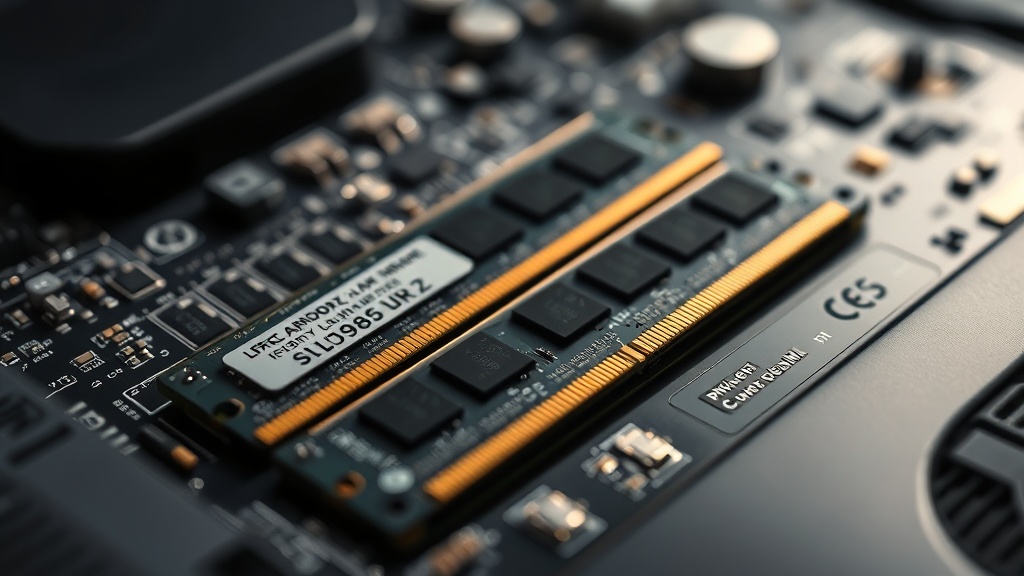
LPCAMM2 stands for Low-Power Compression Attached Memory Module 2. It's a standardized, removable memory module that delivers LPDDR5X speeds — we're talking 8533 MT/s in current Lenovo ThinkPad T-series implementations — while remaining physically socketed and user-replaceable.
Read that again: LPDDR5X performance. Socketed. Replaceable.
This was the argument OEMs told us was impossible. "We have to solder LPDDR to the board for signal integrity." "The power savings require direct board attachment." "A socketed solution can't match soldered latency." Every single one of those claims just got shredded by an industry standard that multiple manufacturers are now shipping.
Dell originally developed the CAMM format for their Precision workstations. JEDEC standardized it as LPCAMM2 in 2024. And now in 2026, we're seeing adoption spread from workstation-tier machines into mainstream ThinkBook lineups, with Chinese memory manufacturer CXMT producing modules alongside established players. That's the supply chain diversification that turns a niche standard into an actual market force.
The Soldered RAM Damage Report
Let me lay out what soldered RAM actually costs you, because the industry has normalized this so thoroughly that people have stopped being angry about it.
Financial damage: An 8GB-to-16GB upgrade that would cost you $25 in a SODIMM swap instead costs you the entire price of a new SKU — often $200-400 more at purchase, with zero aftermarket options. And if you bought 16GB in 2023 thinking it was enough? Tough. Your machine is now e-waste for AI-hungry workflows that want 32GB minimum.
Longevity damage: A laptop with upgradeable RAM can serve 6-8 productive years. A soldered 8GB ultrabook from 2022 is already choking on browser tabs and local LLM inference. That machine had another 3-4 years of useful life in it — killed by a manufacturing decision that saved the OEM roughly $1.50 per unit in assembly costs.
Repair damage: When soldered RAM fails — and I've seen it fail plenty in thermal stress testing — the entire motherboard is scrap. Not the $30 DIMM. The $400-800 mainboard. Your "thin and light" just became thin and landfill.
Environmental damage: The e-waste math is brutal. Millions of otherwise-functional laptops get retired early every year because their fixed RAM configuration can't keep up with software requirements. This is planned obsolescence with extra steps, and the "we care about sustainability" messaging from the same companies soldering your RAM shut is industrial-grade cognitive dissonance.
Who's Actually Shipping LPCAMM2 (And Who's Stalling)
Lenovo is leading the charge here, and credit where it's due — the 2026 ThinkPad T-series and ThinkBook 14+/16+ lines are shipping with LPCAMM2 slots. These machines let you pop in a 32GB or 64GB LPCAMM2 module from multiple suppliers, at LPDDR5X speeds, with no performance penalty versus soldered configurations.
Framework, predictably, has been all over modular memory from the start. Their approach uses standard SODIMMs rather than LPCAMM2, but the philosophy is identical: your RAM, your choice, your upgrade path.
Now here's where it gets interesting — and by interesting, I mean infuriating. Apple continues to solder unified memory with zero upgrade path and zero apology. Their "but it's unified memory architecture" argument has some technical merit for the M-series memory controller design, but let's be honest: they also charge $200 for a RAM tier upgrade that costs them maybe $15 in flash. The architecture choice and the pricing strategy are not unrelated.
Most Windows ultrabook manufacturers are still hedging. HP's consumer Spectre and Envy lines? Still soldered in most configurations. Dell XPS? Soldered. ASUS ZenBook? Soldered. They'll adopt LPCAMM2 when the market forces them to, not a minute before.
The QA Engineer's Take
I spent years in thermal stress testing labs, and I can tell you exactly what happens to soldered LPDDR under sustained load: the thermal cycling at the solder joints creates microfractures over time. With a socketed module, that's a $40 replacement. With soldered RAM, that's a dead motherboard.
LPCAMM2 doesn't just solve the upgrade problem — it solves the repair problem, the longevity problem, and the e-waste problem simultaneously. It's one of those rare standards where the engineering solution and the consumer-friendly solution are the same thing.
The real question isn't whether LPCAMM2 works. It does. The benchmarks prove it. The shipping products prove it. The question is whether enough OEMs adopt it before the window closes and they all collectively decide that soldered LPDDR6 is "necessary" for next-gen performance.
What You Should Actually Do
If you're buying a laptop in 2026, here's my framework:
Check the RAM configuration before anything else. Not the amount — the type. Is it soldered or socketed? LPCAMM2 or SODIMM? This single spec tells you more about the manufacturer's respect for your investment than any marketing slide.
Refuse to pay the soldered RAM tax. If a manufacturer offers 16GB soldered with no upgrade path, they are betting that you'll buy a whole new machine in 2-3 years. Don't reward that bet.
Support the companies doing it right. Lenovo's LPCAMM2 adoption and Framework's modular approach deserve your dollars. Market signals are the only language OEMs understand.
Max out if you must go soldered. If your dream machine only comes with soldered RAM — and sometimes it does — buy the maximum configuration. You're stuck with it forever, so act accordingly.
The soldered RAM era wasn't inevitable. It was a choice — made by manufacturers, for manufacturers. LPCAMM2 proves that performance and repairability were never mutually exclusive. The only question left is whether we, as buyers, make it clear that we noticed.
Stay wired.