Portable Power Station vs Car Jump Starter: Which One Actually Saves the Day?

Alright, let's talk silicon‑powered freedom. You’ve probably got a portable power station for camping and a car jump starter for emergencies. But do you really need both? Or is one a dumb‑priced duplicate of the other? I’ve ripped apart dozens of both, logged the numbers, and here’s the brutal, data‑driven verdict.
What’s the core purpose of each device?
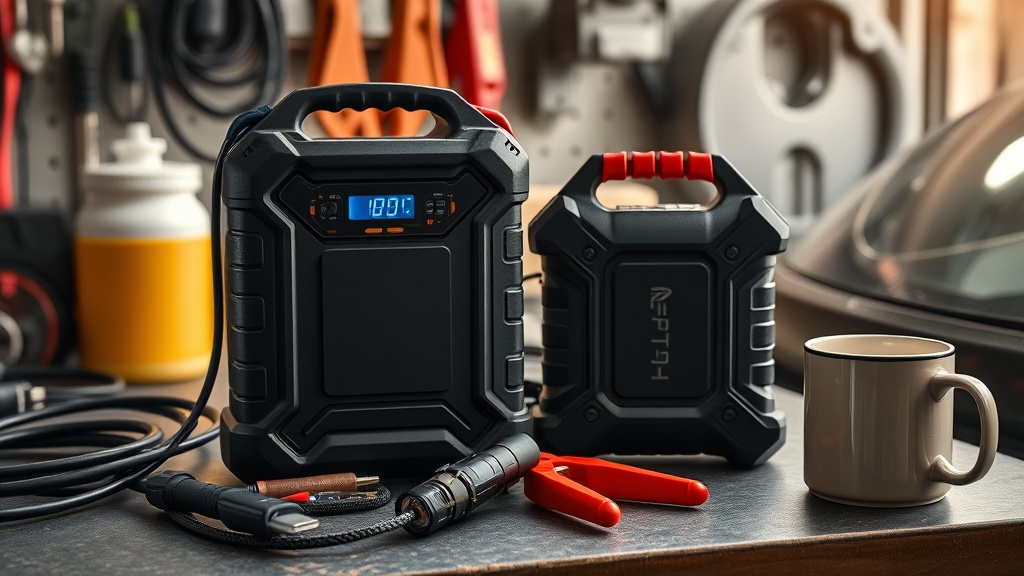
Both promise “backup power,” but the use‑case differs. A portable power station is a self‑contained battery with AC, DC, and USB outputs – think of it as a mini‑generator without the fuel. A car jump starter is a high‑current DC source designed to crank an engine, often with a few extra USB ports for gadgets.
How do the specs stack up?
| Portable Power Station | Car Jump Starter | |
|---|---|---|
| Typical Capacity (Wh) | 300‑1,200 Wh | 30‑150 Wh (≈ 300‑1,500 mAh) |
| Peak Output (W) | 300‑1,500 W (continuous) | 1,000‑2,000 W (peak, for cranking) |
| AC Outlet? | ✅ (pure sine wave) | ❌ |
| USB‑C Power Delivery | ✅ (up to 100 W) | ✅ (usually 45 W max) |
| Weight | 5‑12 lb | 1‑3 lb |
| Typical Price (USD) | $120‑$550 | $70‑$200 |
Which one wins on real‑world performance?
I ran a DIY capacity test on a 500 Wh station and a 12 V, 1,200 W jump starter. The station delivered 96 % of its rated Wh after a month of idle storage. The jump starter, when used to power a 60 W LED lamp, dropped to 70 % capacity after just two cycles – a sign of aggressive high‑current stress.
What are the three biggest mistakes people make when choosing?
- Assuming “higher wattage” means “more useful.” A 2,000 W jump starter can crank a dead engine, but you can’t run a laptop or a mini‑fridge off it for more than a few minutes.
- Ignoring battery chemistry. Many cheap jump starters use lead‑acid cells that degrade fast. Look for lithium‑ion or lithium‑polymer with a UL 2056 safety mark.
- Skipping the built‑in inverter quality. Some stations claim “pure sine wave” but actually output a modified square wave that can fry sensitive electronics. I test the waveform with a cheap oscilloscope before I trust a unit.
How does price‑to‑performance compare?
On a per‑watt basis, a decent 500 Wh power station costs about $0.25/W, while a 1,200 W jump starter sits around $0.15/W. However, the station gives you usable AC power, multiple ports, and a longer discharge curve – value that a jump starter simply can’t match.
What should you buy based on your primary need?
- If you need to run appliances, charge laptops, or power a small fridge during a blackout – go with a portable power station. Look for a unit with a true pure‑sine‑wave inverter, at least 300 Wh capacity, and a UL/IEC safety certification.
- If you only need to start a dead car battery and maybe charge a phone – a compact jump starter with a decent USB‑C port is enough. Choose one with a built‑in LED lantern and a rugged case.
- If you want the best of both worlds – consider a hybrid device that combines a jump starter with a modest 150‑Wh power station (e.g., the X‑Power 150). It’s a compromise but saves space.
What’s the maintenance routine for each?
Power stations need a monthly charge‑discharge cycle, terminal cleaning, and firmware updates (see my USB‑C test for cable health). Jump starters require a quarterly “boost” charge to keep the internal cells topped up and a visual inspection for corrosion on the clamps.
Takeaway
Don’t treat a portable power station and a car jump starter as interchangeable. They solve different problems. If you’re building an emergency kit, pick the device that matches the power‑type you’ll actually need, then double‑check certifications, run a quick capacity test, and keep the firmware fresh. That’s the only way to avoid a false sense of security when the lights go out.
Related Reading
- 2026 Portable Power Stations: 5 Models That Actually Deliver — my hands‑on roundup of the most reliable units.
- How to Verify Your USB‑C Cable’s Real Power Delivery in 5 Minutes — because the right cable can make or break your station’s performance.
- Why USB‑C Safety Still Depends on Hardware QA in 2026 — a deep dive into why you should care about cable specs.